

A pergola snow load rating is the maximum weight of snow, measured in kg/m² or PSF, that a roof structure can safely carry. Wind ratings work the same way, expressed in Beaufort levels or MPH. Misreading these units is one of the most expensive sourcing mistakes you can make in this category. A pergola rated for the wrong climate fails on site, and the replacement cost lands on you, not the factory. This guide shows you how to convert both scales and compare ratings correctly.
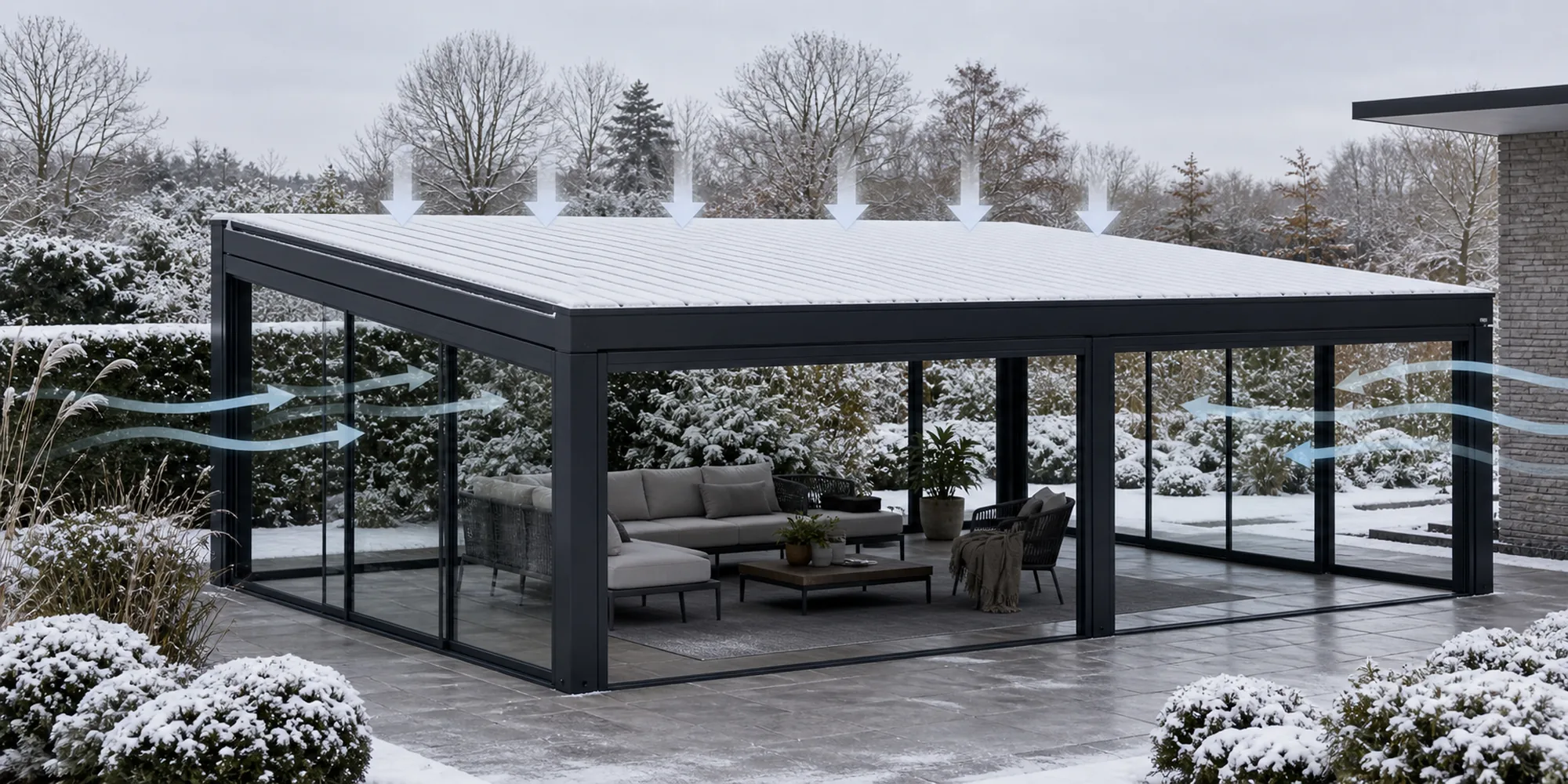
How Pergola Snow Load Ratings Work: kg/m² vs PSF
Snow load describes vertical weight pressing on the roof per unit of area. Chinese and European factories publish it in kilograms per square meter (kg/m²). If you buy for the North American market, your codes and customers speak in pounds per square foot (PSF).
The two units measure the same thing. One kg/m² equals 0.205 PSF, and one PSF equals 4.88 kg/m². Keep those two factors in your notes, and every spec sheet you receive becomes readable in seconds.
Here is where you get burned. A supplier quoting “100 snow load” without a unit could mean 100 kg/m² (20.5 PSF) or 100 PSF (488 kg/m²). Those are different structural classes entirely. Never accept a load figure without its unit in writing.
The following table converts the snow load tiers most common in louvered pergola systems:
| Factory Rating (kg/m²) | Equivalent (PSF) | Snow Condition Covered |
|---|---|---|
| 50 kg/m² | 10.2 PSF | Light regional snowfall |
| 75 kg/m² | 15.4 PSF | Moderate winter markets |
| 100 kg/m² | 20.5 PSF | Regular heavy snowfall |
| 120 kg/m² | 24.6 PSF | Alpine and severe zones |
What Snow Load Numbers Mean in Real Conditions
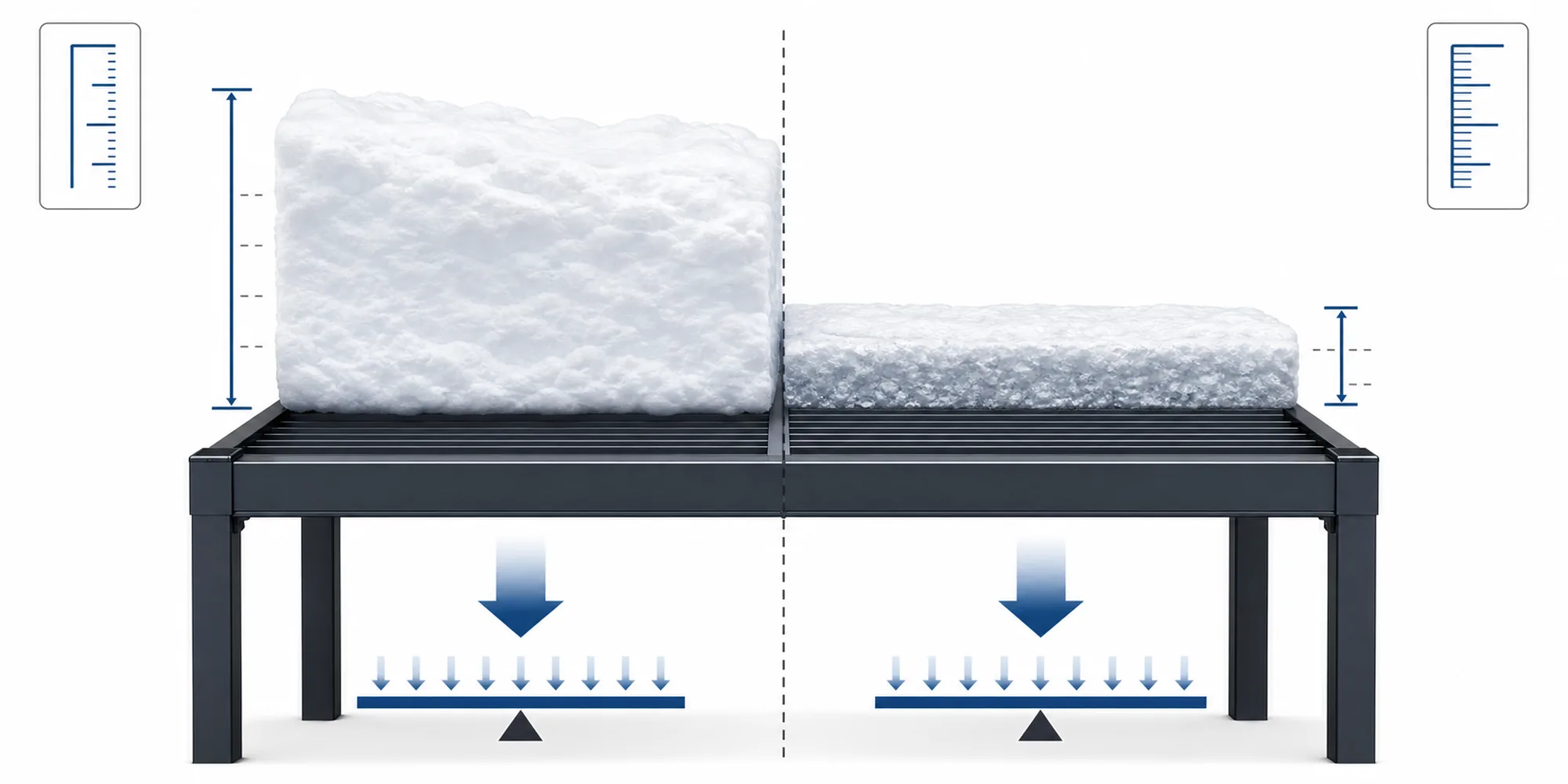
Snow weight varies more than you might expect. Fresh dry powder weighs roughly 30 to 70 kg/m³. Wet compacted snow can pass 300 kg/m³, and ice sits near 900 kg/m³.
That spread changes your math. At a reference density of 100 kg/m³, a rating of 50 kg/m² corresponds to about 50 cm of snow. At roughly 330 kg/m³, the same rating covers only about 15 cm of wet compacted snow. When you match a rating to your market, plan for the wettest snow that market sees, not the average.
Adjustable roofs give you a variable fixed structures do not have. Louvers rotating through 0 to 180 degrees can open fully in winter, letting snow fall through instead of accumulating. Do not sell that to your customers as the safety plan, though. A failed motor or an absent owner during a storm leaves the roof closed.
When we size a louvered model, we work from the closed-roof load case first, because that is the condition a dead motor creates. The range is then tiered from 50 kg/m² entry systems up to 120 kg/m² for alpine markets, so the aluminum pergola you stock can match the wettest winter your region sees, not the catalog average.
How Pergola Wind Ratings Work: Beaufort vs MPH
Wind ratings answer a different question: how much horizontal force the frame, louvers and anchoring resist before damage. Factories in Asia and Europe often state wind resistance on the Beaufort scale. If your customers think in miles per hour, you need to translate between the two before quotes make sense.
The Beaufort scale runs from 0 (calm) to 12 (hurricane force). It was built for observed sea conditions, which is why the numbers feel abstract until you convert them.
The comparison below translates the Beaufort levels that matter for outdoor structures:
| Beaufort Level | Wind Speed (MPH) | Wind Speed (km/h) | Practical Meaning |
|---|---|---|---|
| Bft 8 (Gale) | 39–46 | 62–74 | Twigs break, walking is hard |
| Bft 9 (Strong gale) | 47–54 | 75–88 | Minor roof damage begins |
| Bft 10 (Storm) | 55–63 | 89–102 | Trees uprooted, structural risk |
| Bft 11 (Violent storm) | 64–72 | 103–117 | Widespread damage |
| Bft 12 (Hurricane) | 73+ | 118+ | Category 1 hurricane threshold |
Read every supplier claim you receive against this table. A structure tested at Beaufort 10 has faced 55 to 63 MPH airflow, roughly a severe thunderstorm. That is a credible engineering claim. A casual “hurricane proof” line with no Beaufort or MPH figure behind it is marketing, not data, and you should treat it that way.
Louver position matters for wind exactly as it does for snow, but reversed. Open louvers let wind pass through and cut the loaded surface dramatically. If you supply coastal or storm markets, teach your installers to open roofs ahead of major wind events.
Why Factory Specs and Local Building Codes Differ
A factory rating and a building code requirement are related but not interchangeable. Factories publish what the product survived in testing. Codes define what your site demands, and the two use different calculation paths.
European projects fall under Eurocode EN 1991, which sets snow and wind actions by climate zone, altitude and exposure. International snow load methodology is defined in ISO 4355, which converts ground snow load to roof snow load using shape and thermal coefficients. North American projects reference ASCE 7 with the same logic in imperial units.
The practical consequence for you: a code officer asks for site-specific values, not catalog values. A pergola rated 100 kg/m² may satisfy one town and fail the next, purely on local climate data. If you sell across regions, one model rarely covers your whole territory.
Some suppliers treat a load rating as a number to print in the catalog. ALUX treats it as a design input: climate zone requirements of the kind EN 1991 describes are considered at the development stage, when beam sections and louver profiles are sized. A rating that starts from code logic is easier for you to defend when a permit reviewer starts asking questions.
How Manufacturers Actually Test These Ratings
A rating is only as good as the test behind it, so ask how the number was produced. Credible load claims come from three test types, and each leaves paperwork you can request.
Snow Load Testing
When we run static load tests, we place distributed weight—sandbags or steel plates—across the closed roof in steps, holding each step to check for deformation before adding the next. Third-party witnessed versions carry more weight in your tenders. On-site verification by bodies such as TÜV Rheinland documents the roof holding its rated capacity.
Wind Testing
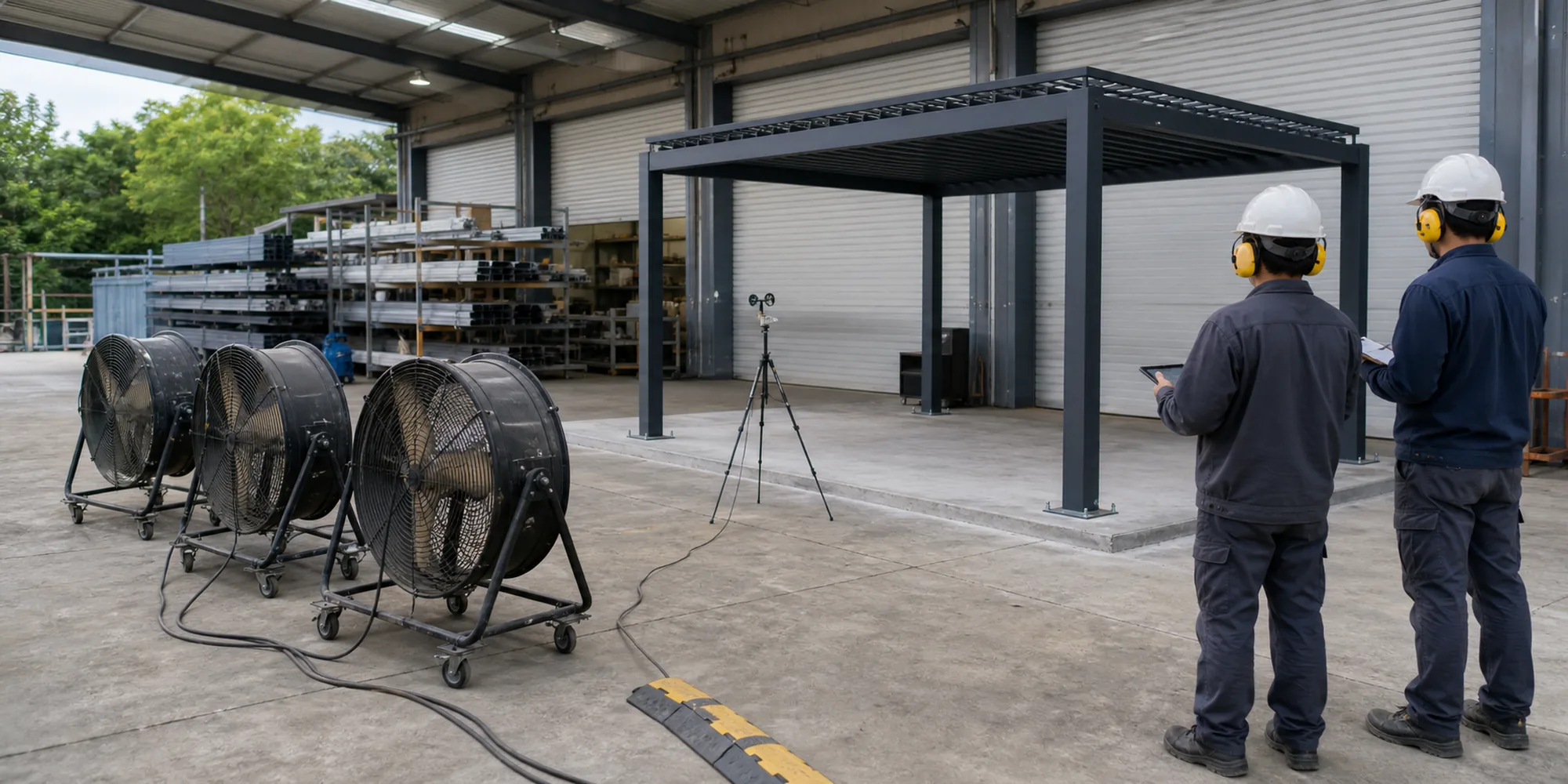
When we run fan-rig tests, we push sustained airflow at fully assembled units rather than isolated components, watching for frame deflection, louver flutter and fastener movement while the load is live. Testing at Beaufort 10 conditions, around 55 to 63 MPH, represents the serious end of factory capability. What a test like this exposes, a spec sheet never will: a louver that rattles at Beaufort 8 fails long before the frame does.
For real-world context, the independent field observation below shows how an installed louvered pergola behaved after heavy snowfall. It is not a laboratory test and does not replace a model-specific engineering report.
Watch on YouTube: an independently published, 4:56 field observation of a louvered pergola after heavy snowfall.
Documentation to Request
Ask for the test report itself, not a certificate summary. A real report names the standard applied, the specimen model, the load steps and the result. A supplier that hesitates or negotiates over paperwork is telling you something about what the paperwork contains. You can usually cross-check a factory’s certification scope against its published certification documentation.
Questions Buyers Should Ask Before Comparing Ratings
Unit confusion causes most rating disputes, so lock the basics down in writing before you compare quotes. These five questions surface the gaps quickly.
- Which unit is this rating in, kg/m² or PSF, and was it tested closed or open?
- Is the wind figure sustained speed or gust, and at which Beaufort level was it tested?
- Can you send the full test report, including the standard and load steps?
- Does the rating assume your standard anchoring, and what foundation does it require?
- Which model in the range carries the highest closed-roof snow rating?
Anchoring deserves your closest look. Every wind rating assumes the posts are fixed as engineered. A frame rated for storm conditions on concrete footings performs very differently on unanchored pavers. Confirm the foundation assumption behind the number, and pass it to your installation team.
For a wider comparison of how frame material affects structural behavior, the analysis in steel pergola vs aluminum pergola covers load capacity alongside corrosion and cost factors.
FAQ
How do you convert pergola snow load from kg/m² to PSF?
Multiply the kg/m² figure by 0.205 to get PSF. Going the other way, multiply PSF by 4.88 to get kg/m². A 100 kg/m² rating therefore equals about 20.5 PSF, and a 30 PSF requirement equals roughly 146 kg/m².
Is 50 kg/m² a good snow load rating for a pergola?
A 50 kg/m² rating, about 10.2 PSF, suits markets with light to moderate snowfall. It covers roughly 50 cm of snow at a reference density of 100 kg/m³ but only around 15 cm of wet snow near 330 kg/m³. Heavy-snow regions should specify models rated 100 to 120 kg/m² instead, subject to the site calculation.
What Beaufort level equals hurricane-force wind?
Beaufort 12 marks hurricane force, beginning at 73 MPH or 118 km/h. This matches the Category 1 hurricane threshold. Structures tested at Beaufort 10, between 55 and 63 MPH, have proven themselves against severe storm conditions short of hurricane strength.
Should pergola louvers be open or closed during heavy snow?
Open louvers let snow fall through and greatly reduce accumulation on the roof. Closed louvers carry the full load, so the closed-roof rating defines the safety margin. Specify products by their closed rating, follow the instructions for the exact model, and treat opening as an operational bonus.
Are factory load ratings the same as building-code requirements?
No. Factory ratings state what the tested product can carry. Building codes calculate what your specific site demands, using local climate data, altitude and exposure. Permits compare the two, so both a test report and a site calculation are needed.
What documents prove a pergola’s snow and wind rating?
Request the full third-party test report, not a summary certificate. It should name the standard, the tested model, load steps and results. Reports witnessed by recognized bodies such as TÜV Rheinland carry the most weight in tenders.
Conclusion
Snow and wind ratings only protect you when the units, test conditions and site requirements line up. Convert every figure into one system, confirm whether it applies to a closed roof, and demand the report behind the number. When you standardize this checklist, you compare suppliers on evidence instead of adjectives, and factories like ALUX that build ratings from code logic and test at assembled-unit level make that comparison straightforward.